Successful digital transformation is not simply about adopting new tools. It requires purpose, vision, and motivated people. Without clear direction and human-centered input, organizations risk wasting time, resources, and the potential return on investment.
Change agents, those who push for innovation, must work across departments and leadership levels. If transformation is driven only by a CIO, a Chief Digital Officer, or a business head, it may remain too narrow. Technology may be adopted without customer empathy, or marketing tools may be rolled out without involving operations or risk management. True transformation needs to be enterprise-wide, guided by collaboration, customer understanding, and long-term strategy.
Most financial institutions today are on some form of digital transformation journey, though with varying levels of progress. To help institutions assess their status and identify the next steps, we introduce a six-stage model of digital transformation, derived from research by Altimeter, a consulting firm in San Francisco.
The Six Stages of Digital Transformation
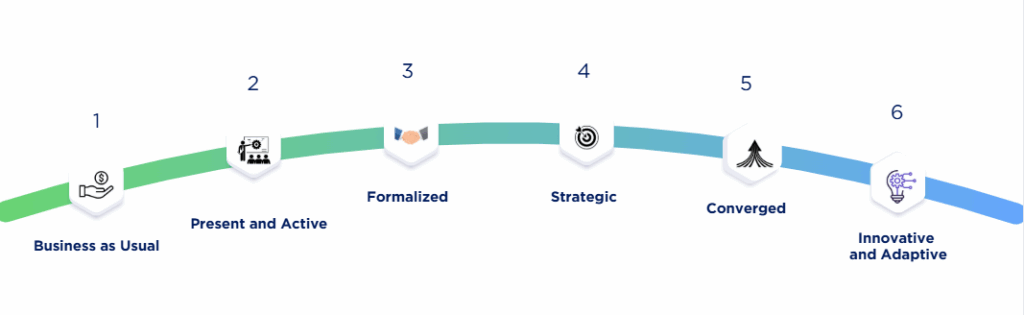
1. Business as Usual
Institutions operate with legacy processes, metrics, and business models. Technology is used mainly for efficiency. Risk aversion, regulation, and a focus on current stakeholders discourage innovation. Creativity and customer needs are undervalued, and digital transformation is not a priority.
2. Present and Active
Change agents within the organization begin experimenting with digital initiatives. Motivated by trends like mobile and social media, they test new ideas—even without formal approval. These “early adopters” generate momentum but often work in silos.
3. Formalized
Experimentation becomes more intentional. Teams collaborate across departments, breaking down silos. Roadmaps for digital transformation begin to take shape, supported by executive sponsorship and resources. Investments are targeted at people, processes, and technology to prepare for broader adoption.
4. Strategic
Digital transformation becomes a corporate priority. The C-suite is engaged, urgency is established, and clear short- and long-term objectives are set. Substantial investment is directed into infrastructure, operations, and expertise. Technology is integrated to serve strategy rather than dictate it.
5. Converged
Dedicated transformation teams are formed to unify roles, processes, and systems across the enterprise. Customer experience becomes seamless and consistent across channels. Both customer-facing and back-office technology are integrated. Digital transformation now extends beyond customer experience to reshape all facets of the business.
6. Innovative and Adaptive
At this stage, transformation becomes continuous. Innovation is embedded into the organization’s identity. Formal structures exist to monitor customer behavior, technology trends, and market shifts. Test-and-learn initiatives, startup collaborations, and new roles enrich operations. Change is no longer a one-time event but a permanent mindset.
Six Criteria for Assessment
To evaluate where an institution stands, these six stages can be assessed against six elements:
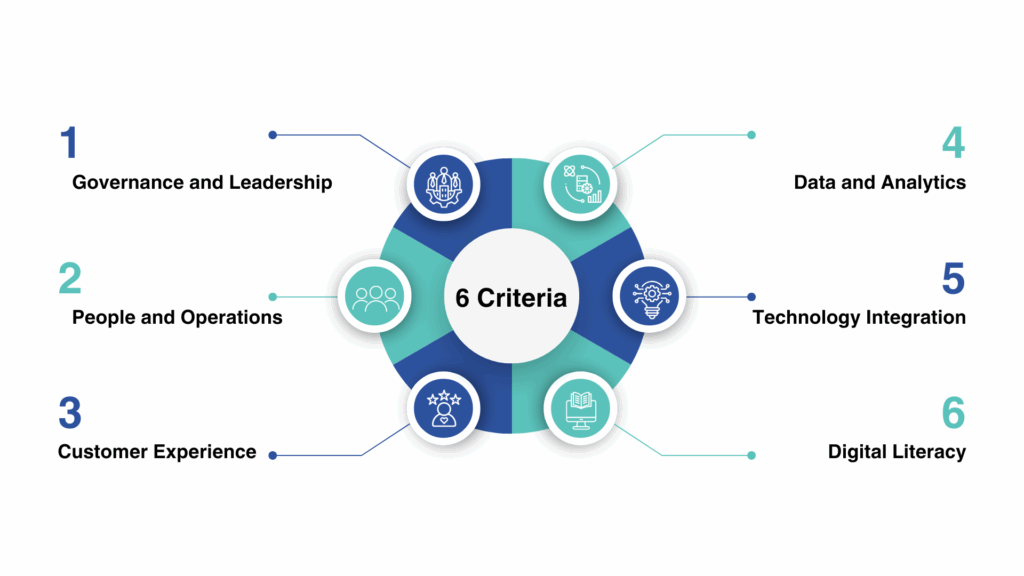
By plotting these dimensions, institutions can identify their current stage and chart the steps needed to move forward.
What’s Next in the Series
This six-stage model illustrates how financial institutions evolve from business-as-usual to becoming innovative and adaptive organizations. Importantly, digital transformation is not an end in itself—it is the consequence of a broader business strategy.
In the next session of our Digital Transformation and Business Strategy Blog Series, we will explore what it takes to design that strategy and align it with transformation goals.