Credit Risk Series Summary
This final article in our Credit Risk Management series brings together Expected Loss, Unexpected Loss, and RAROC, showing how these metrics support pricing, capital allocation, profitability, and stronger credit risk management decisions.
Throughout the credit risk series, we've taken a deep dive into the core principles of credit risk management, breaking down the building blocks, unpacking the models, and exploring how these concepts move from theory to execution.
This is a structured credit risk summary that connects theory to practice, designed for institutions serious about strengthening their risk-based decision-making.
What We Covered
Chapter 1: PD, LGD, and EAD
We begin the credit risk series by examining the three foundational variables:
i. Probability of Default (PD)
ii. Loss Given Default (LGD)
ii. Exposure at Default (EAD)
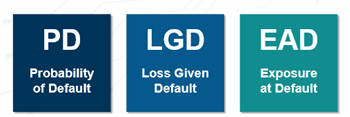
These three metrics form the foundation of credit risk quantification, providing a common language for pricing, provisioning, and regulatory compliance.
Chapter 2: Expected Loss (EL)
The Concept of EL and UL
We then introduce the concepts of Expected Loss and Unexpected Loss, and how the latter plays a central role in determining capital adequacy. These principles form the basis for understanding regulatory capital frameworks, such as those outlined under the Basel Accords, and practical tools like Risk Adjusted Return on Capital (RAROC) for performance measurement.

Throughout this publication, we aim to balance analytical rigor with practical clarity. Even the more advanced concepts are presented in a way that makes them accessible and actionable for professionals involved in day-to-day credit risk management.
The Q-Lana Loan and Asset Management Platform is designed to integrate these concepts into institutional processes, supporting the operationalization of sound credit risk practices. In addition, our advisory services help institutions customize and implement these methodologies in alignment with their strategic objectives.
Chapter 3: Unexpected Loss (UL)
We then shifted our focus to Unexpected Loss (UL), which is the part of credit loss that lies beyond the average. Using simulation techniques and loss distribution models, we examined how institutions can quantify volatility, assess tail risk, and structure capital buffers to maintain solvency through uncertain times.
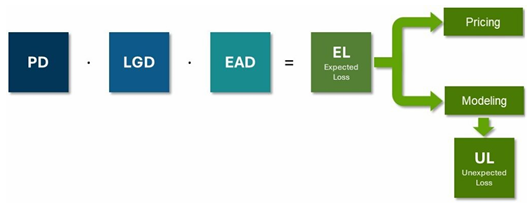
We shifted focus to Unexpected Loss, the part of credit loss that lies beyond the average, using simulation techniques and loss distribution models to quantify volatility, assess tail risk, and structure capital buffers.
Chapter 4: Capital Requirements per Loan
Moving from portfolio to individual loan level, we demonstrated how to calculate capital requirements using the Basel IRB approach, translating policy into practice with PD, LGD, and EAD as operational inputs.
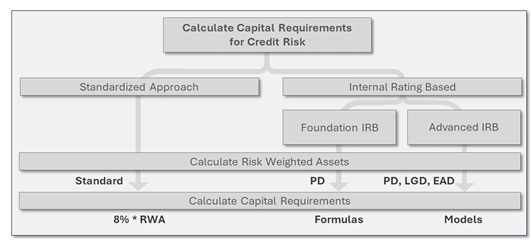
Chapter 5: RAROC
Finally, we brought it all together with Risk-Adjusted Return on Capital (RAROC), comparing income to risk-weighted capital to evaluate profitability through the lens of risk.
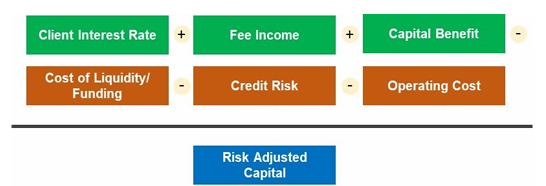
Main Learnings from the Credit Risk Series
i. Credit Risk Concepts Vs Performance and Pricing
This series outlined the fundamental principles of credit risk management and pricing, beginning with EL and UL and extending to their practical application in loan pricing, capital allocation, and financial performance management.
ii. PD, LGD, and EAD Drive Risk Quantification
These variables serve as the foundation for calculating both EL and UL, enabling institutions to provision for average losses and reserve capital for more volatile outcomes, translated into actionable strategies through RAROC.
iii. Risk Models Can be Integrated into Daily Decision-Making
Integrating risk models into daily decision-making allows financial institutions to steer portfolios more effectively, price products more accurately, and achieve stronger, risk-aligned profitability.
Q-Lana's Platform
At Q-Lana, implementing a robust credit risk framework, especially one incorporating RAROC, requires more than theory: it demands the right tools, structured methodologies, and collaborative execution.
i. Technology That Enables Credit Risk Strategy
Our Loan and Asset Management Platform offers fully integrated modules for PD, LGD, and EAD analysis; real-time EL and UL monitoring across loans and portfolios; automated pricing logic using RAROC principles; and comprehensive reporting to meet internal and regulatory standards.
ii. Implementation as a Partnership, Not a Product
Implementing RAROC and advanced credit risk practices involves aligning methodologies, configuring systems, and training staff. We work closely with financial institutions to ensure risk management isn't just a compliance function---but a strategic capability that drives sustainable growth.
Let's Help you Transform Credit Risk Management
Whether you are just beginning your journey toward risk-based pricing or looking to enhance your current framework, we help you transform credit risk management into a powerful engine of profitability, resilience, and competitive advantage.
About This Series
This article is part of Q-Lana's Credit Risk Concepts series, exploring the quantitative techniques that support pricing, capital planning, and performance measurement.
The complete series includes:
- Credit Risk Concepts: Introduction
- Quantifying Credit Risk Using PD, LGD and EAD
- Expected Loss in Credit Risk: Formula, Calculation & Examples
- Unexpected Loss (UL): Capital Buffers, Calculation & Portfolio Implications
- Quantifying Capital Requirements for Individual Loans
- RAROC: How to Calculate Risk-Adjusted Return on Capital (With Worked Example), and this summary.
Continue the Conversation
Talk to the team. Senior-to-senior. No sales call.
Subscribe to Q-Lana Weekly. One newsletter, five lenses, free, no paywall.
Read the related white paper. Frameworks built to be deployed.